GCI Testimony at Chicago’s Reparations Public Hearings
Summary
On June 17, 2024, Mayor Brandon Johnson issued an Executive Order creating the Chicago Reparations Task Force, formally launching a City process to examine the harms experienced by Black Chicagoans across generations. The effort brings together the Office of Equity and Racial Justice, the Aldermanic Black Caucus, and community representatives to help guide Chicago’s first comprehensive study on reparations and consider potential paths toward repair.
The Task Force includes both organizational representatives and residents whose lives and work are connected to historically Black neighborhoods in Chicago, including people who remain in those communities and those who have been displaced. Its work centers on clarifying what reparations should mean in Chicago, examining harms across areas such as housing, policing, incarceration, education, health, and economic development, and supporting public engagement around the City’s reparations process.
The Great Cities Institute is honored to assist this historic effort through the participation of Thea Crum, Associate Director of the Neighborhoods Initiative at GCI, as a member of the Task Force. Crum’s work has long centered participatory democracy, civic engagement, community development, and equity-centered public decision-making. Her involvement in the Reparations Task Force reflects GCI’s broader commitment to engaged research and public scholarship that is rooted in community experience, responsive to structural harm, and attentive to the work of repair.
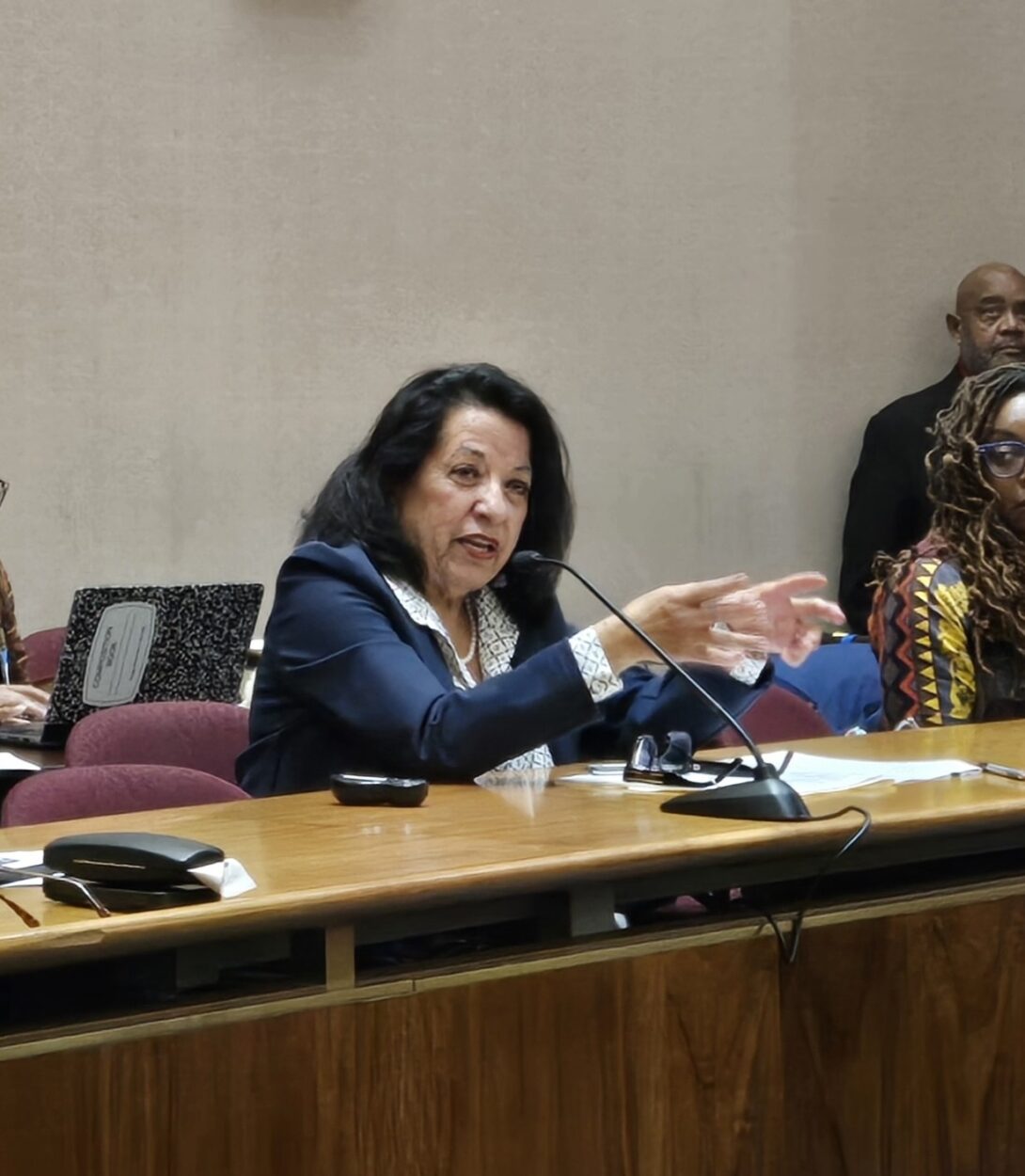
That commitment also shaped GCI’s participation in the City’s Reparations Public Hearings, convened on June 22 and June 23, 2026, in the City Council Chambers at City Hall. The hearings marked an important step in the City’s effort to build a formal public record of the policies and practices that have harmed Black Chicagoans and contributed to persistent racial inequities. By inviting subject matter experts to offer testimony grounded in research, professional experience, and lived knowledge, the hearings created a space for these histories and their ongoing consequences to be placed before City leadership and the broader public.
The June 22 hearing focused on economic development and housing. As part of that hearing, Dr. Teresa Córdova, Director of the Great Cities Institute and Professor of Urban Planning and Policy at the University of Illinois Chicago, provided testimony (Video & PDF) on the relationship between economic development policy and systemic harm experienced by Black Chicagoans.
Dr. Córdova situated reparations within a broader history of urban development, public policy, private investment, and racialized inequality, emphasizing how decisions about land, housing, infrastructure, employment, capital, and public resources have shaped unequal conditions across generations.
The racial inequities we observe today were not produced naturally or accidentally. They were produced through interconnected public and private decisions that systematically concentrated wealth, opportunity, and investment in some communities while denying them to others. The story of racial inequality in Chicago is therefore not simply a story about discrimination. It is also a story about development.
Córdova traced how racial exclusion evolved in Chicago through housing markets, public policy, and institutional decision-making, while also emphasizing that this history must recognize what Black Chicagoans built despite systemic barriers.
Housing was a mechanism through which wealth was either created or denied. … Black Chicagoans were systematically excluded from those opportunities. The result was not merely segregation. The result was the deliberate production of unequal wealth.
We must also recognize what Black Chicagoans built despite these barriers. … This history is important because reparations are not only about documenting what was denied. They are also about recognizing what was created.
Her testimony then turned to economic development itself, challenging the idea that development policy can be separated from the history of racial inequality.
Too often we discuss discrimination and economic development as separate subjects. Historically, they have been deeply intertwined. Urban renewal programs displaced Black residents and businesses throughout the country, including in Chicago. Highway construction cut through neighborhoods, disrupted community networks, and reinforced patterns of segregation.
Córdova also addressed racialized economic restructuring, especially the decline of industrial employment and its consequences for Black neighborhoods.
The harm did not end with segregation. It evolved through economic restructuring. … What disappeared was not simply employment. Communities also lost purchasing power, commercial activity, institutional resources, and pathways through which economic opportunity had previously circulated through neighborhoods.
In describing the intergenerational consequences of these systems, Córdova emphasized that the harms were not only individual, but collective, civic, institutional, and democratic.
This was not simply a matter of individual disadvantage. Community wealth was diminished. Institutional capacity was weakened. Commercial districts deteriorated. Political power was reduced. Social infrastructure eroded. The losses were collective.
She concluded by connecting the historical record to the necessity of reparative action and the systemic nature of repair.
The inequities we observe today were not inevitable. They were produced through human decisions, institutional actions, and public policies. Because they were created, they can be addressed. Because they were systemic, repair must also be systemic.
For Córdova, reparations are therefore not only about acknowledging past harm, but about rebuilding what generations of Black Chicagoans created and what public and private systems too often constrained, destabilized, or denied.