Youth Joblessness News Conference
Event Summary
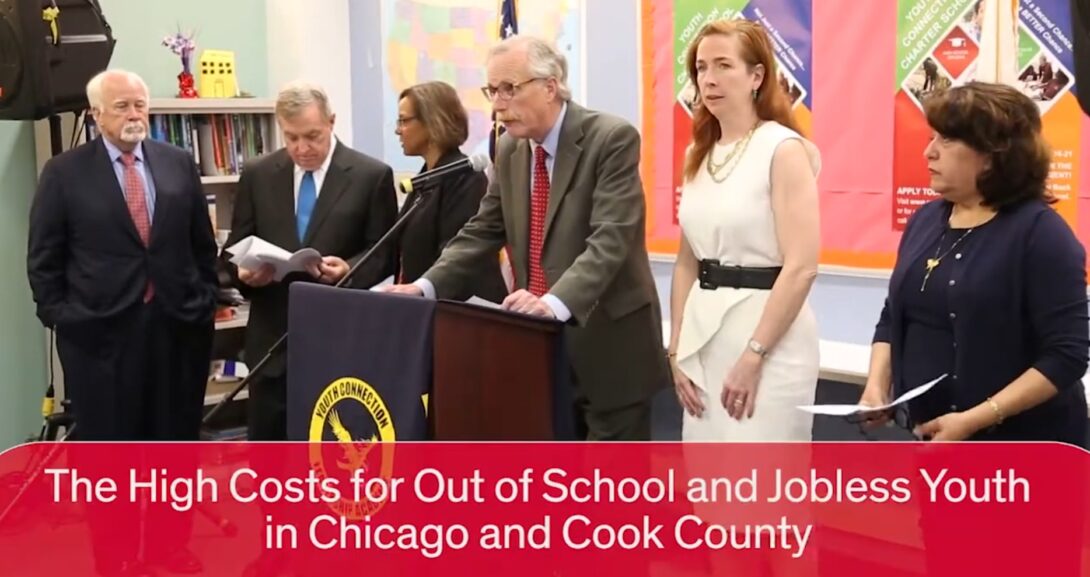
At a June 12, 2017 news conference, education and workforce leaders joined U.S. Senator Dick Durbin and U.S. Representative Robin Kelly to spotlight youth joblessness and promote new federal legislation aimed at expanding summer and year-round employment for young people in Chicago and nationwide. Jack Wiest, Executive Director of the Alternative Schools Network, opened by framing the event as a response to urgent employment needs across urban, suburban, and rural communities, emphasizing that access to a first job can change life trajectories.
Durbin described meeting young people whose “rough patches” could have led to devastating outcomes, but didn’t—because a job provided structure, accountability, and someone who cared enough to connect them to opportunity. He argued national evidence shows youth employment increases high school completion, college attendance and graduation, and long-term earnings. Kelly positioned the legislation as violence prevention and economic security strategy—“nothing stops a bullet like an opportunity”—and explained a three-pronged approach: incentivizing businesses through tax credits to hire youth, providing federal resources to strengthen local employment programs, and supporting training and retraining to address skills gaps, including unfilled manufacturing jobs in the Chicagoland area.
Cook County Commissioner Bridget Gaynor and Alderman Patrick O’Connor reinforced the civic responsibility to create pathways to work, highlighting apprenticeships, removing barriers like college costs, and investing early to reduce later social and fiscal costs. Teresa Córdova added research context, noting strong links between educational attainment, unemployment, and earnings, and documenting the fiscal impacts of youth joblessness on the tax base. She highlighted persistent inequities—especially for Black and Latino youth—worsened by the Great Recession, and emphasized geographic mismatch between where jobs are concentrated and where jobless youth live.
Student testimonies from Youth Connection Leadership Academy grounded the policy discussion in lived experience, describing instability, family responsibilities, housing insecurity, and the importance of wraparound support, reengagement programming, and hope. The event closed as a call to mobilize public support so federal funding and incentives can scale proven youth employment solutions.