Calumet River Communities Planning Framework
Introduction
The Great Cities Institute (GCI) at the University of Illinois at Chicago initiated its Great Cities, Great Rivers project in October 2014 as an initiative to highlight the importance of rivers to cities’ economies. GCI’s commitment to assisting Calumet River communities in the study area started with the development of the Commercial Avenue Revitalization Plan in the South Chicago community area beginning in November 2015. The plan, which was released in July 2016, captured the communities’ desire to revitalize their commercial corridors and address the decline that began with the closure of many industries along the river and Lake Michigan. Through the process of developing the Commercial Avenue Revitalization Plan, including engagement with several community organizations in the area, it became apparent that there was a need to facilitate coordination among local partners and address environmental and economic issues surrounding the nearby Calumet River.
Great Rivers
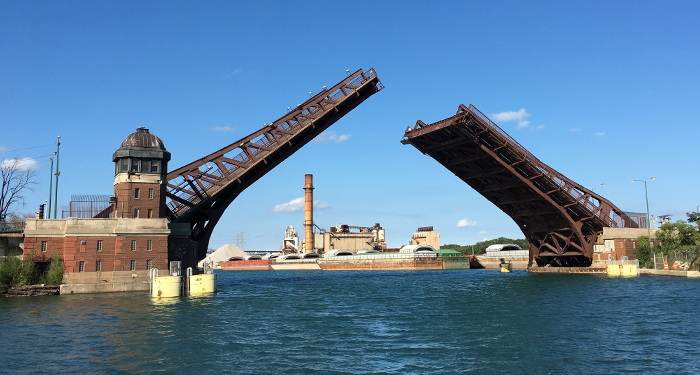
In August 2016, the Metropolitan Planning Council (MPC) released the Our Great Rivers vision for the Chicago, Calumet, and Des Plaines rivers. The MPC document presented a vision to make Chicago’s rivers more inviting, productive, and living for the residents of the city. As a part of the Our Great Rivers project, the Chicago Community Trust announced in February 2017 funding for neighborhood projects that support the implementation of the Our Great Rivers vision.
Recognizing the importance of the Calumet River and the Region, GCI saw the opportunity with the Our Great Rivers funding to bring together local community organizations to develop a strategy to address environmental and economic issues in the Calumet River communities. We appreciate the grant from the Chicago Community Trust that partially funded this document.
The river has historically divided the three community areas of South Chicago, East Side, and South Deering (see pages 4-5) that comprise the study area. This spatial divide has discouraged collaboration across the river, despite the similar environmental and economic impacts each community area has experienced from the industrial uses along the river. While this document focuses on three community areas in the corridor, many of the issues and community perspectives can extend to other areas, such as Hegewisch, Riverdale, and Calumet Heights, for which we provide demographic data in the appendix section. Collaboration among these three communities and others in the area could help prepare for future planning efforts within the area, including the industrial corridor modernization initiative planning process for the Calumet River industrial corridor, as well as ongoing efforts to improve the Illinois International Port District, which includes properties at the mouth of the Calumet River and at Lake Calumet to the west of the communities.
Framework
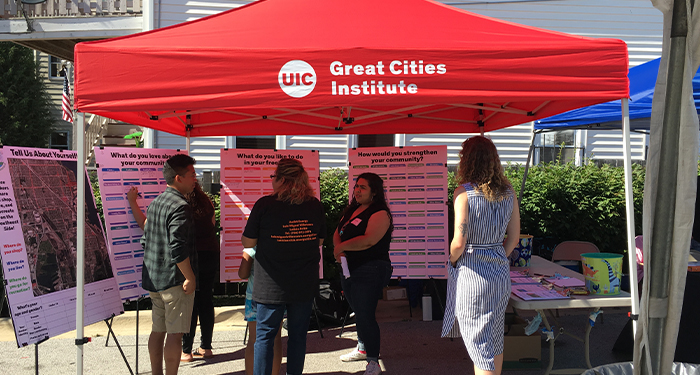
This document, Calumet River Communities Planning Framework – South Chicago, East Side, and South Deering: A Guide for Equitable Development, provides a framework for future planning efforts in Southeast Chicago and focuses on a study area adjacent to the Calumet River from its mouth at Lake Michigan (at approximately 89th Street) south to 106th Street (see Map 1). This study area encompasses portions of the South Chicago, East Side, and South Deering community areas. This document highlights the importance of the Calumet River to these communities and outlines the vision and perspectives that emerged from our community engagement processes: the importance of public health and the environment, social equity, and economic development. We provide applicable principles for future planning processes and development in the community areas (see pages 49, 61, and 83) and broad community ideas that came out of the community engagement process to address identified issues (see pages 20-27).
We hope this document will serve as a resource guide for the communities and allow community organizations, elected officials, city agencies, and other contributors to the built and social environment of Southeast Chicago to better coordinate efforts and share resources to improve the quality of life for all residents.
━━━━━━━━━━━━━━━━━━━━━━━━━━━━━━━━━━━━━━━━━━━━━━━━━━━━━
Currently the project team is conducting outreach to develop a community stewardship and governance plan for the site. If you would like to participate in this project and/or provide your thoughts and feedback, please contact GCI or fill out the form.
Follow us on Instagram (@uicgreatcities) for up-to-date news and photos on Great Cities Institute’s Calumet Region projects.
━━━━━━━━━━━━━━━━━━━━━━━━━━━━━━━━━━━━━━━━━━━━━━━━━━━━━
Partners
Intro
For more than 85 years, the Metropolitan Planning Council (MPC) has partnered with communities, businesses, and governments to unleash the greatness of the Chicago region. It believes that every neighborhood has promise, every community should be heard, and every person can thrive. To tackle the toughest urban planning and development challenges, MPC creates collaborations that change perceptions, conversations—and the status quo.
Intro
As our region’s community foundation, The Chicago Community Trust is a platform for change that connects philanthropy to impact. It brings together generous donors, committed organizations, and caring residents to effect lasting change that moves our entire region forward. The Chicago Community Trust’s mission envisions a Chicago region where equity is central and opportunity and prosperity are in reach for all. To realize this vision, it mobilizes people, ideas, organizations, and resources to improve the lives of people in the Chicago region and beyond.
Intro
Southeast Environmental Task Force (SETF)’s mission is to inform and educate all members of the southeast Chicagoland community, including residents, businesses, and leaders, in areas related to the improvement of our neighborhood’s environment. We strive for sustainable development of residential facilities, environmentally friendly and green business practices, and preservation of natural areas that improve the quality of life in the Calumet region.