“How We Came to Be: An Intellectual Genealogy of Chicano Scholars” Book Panel
October 7, 2026
12:00 PM - 1:00 PM America/Chicago
Location
Great Cities Institute, Large Conference Room
Address
412 South Peoria Street, Suite 400, Chicago, IL 60607-7067
Cost
Free
Calendar
Download iCal FileDownload
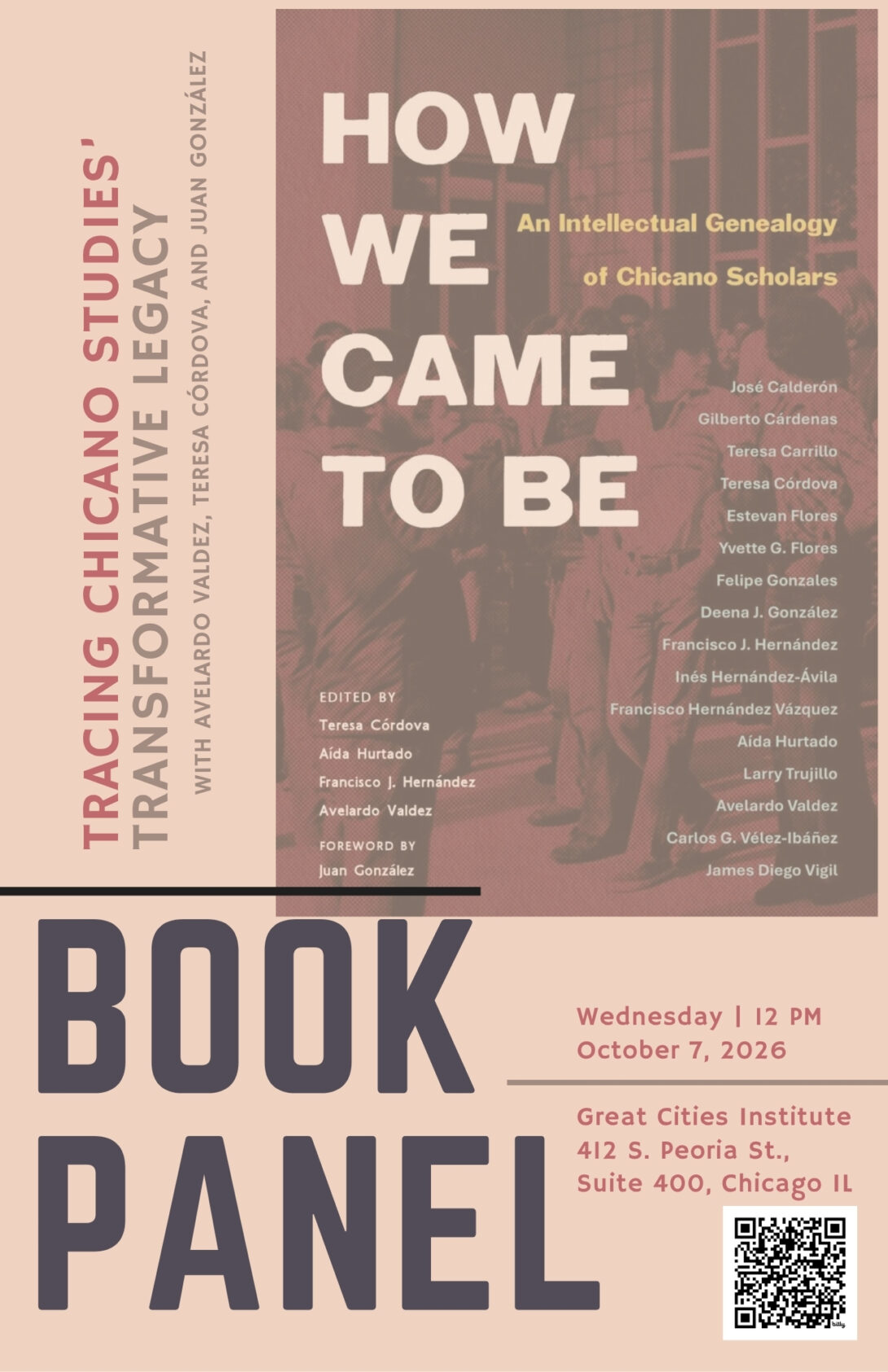
Join the Great Cities Institute for a special book panel and conversation on How We Came to Be: An Intellectual Genealogy of Chicano Scholars, a volume that chronicles the lives, scholarship, and legacies of Chicana and Chicano scholars whose formative experiences in the Chicano Movement helped shape the development of Chicano studies and transform higher education.
Featuring Dr. Avelardo Valdez, Dr. Teresa Córdova, and Juan González, the panel will reflect on the intellectual, institutional, and community histories captured in the book. The conversation will explore how activism became scholarship; how scholars helped build departments, programs, and student support systems; and how community-engaged research contributed to broader struggles for equity, representation, and social change. Panelists will also discuss the enduring significance of these histories for contemporary scholarship, teaching, leadership, and community engagement.
Wednesday, October 7, 2026 | 12:00 PM
Great Cities Institute
412 S. Peoria St., Suite 400
Chicago, IL 60607
About the Book
How We Came to Be: An Intellectual Genealogy of Chicano Scholars brings together sixteen essays organized around the experiences of a generation of Chicana and Chicano scholars whose work emerged from the social and political transformations of the Chicano Movement.
Originating from the Reuniónes de Colegas, gatherings in which veteran scholars came together to reflect on their shared histories, the volume traces the connections between grassroots organizing, intellectual development, and institutional change. Contributors examine the creation of Chicano studies programs, student support initiatives, policy reforms, and new forms of community-engaged scholarship across fields such as urban planning, health advocacy, cultural production, and higher education.
The book also highlights Indigenous and transnational ways of knowing that expanded the theoretical foundations of Chicano studies, while documenting the leadership of Chicana scholars who challenged institutional barriers and reshaped academic administration. Together, the essays offer both an intellectual history and a record of collective efforts to make universities more responsive to historically marginalized communities.
More than a retrospective, How We Came to Be considers how the experiences and lessons of this generation can inform future scholarship, activism, and institutional transformation.
Purchase the book here:
https://uapress.arizona.edu/book/how-we-came-to-be
Date posted
Sep 30, 2026
Date updated
Sep 30, 2026