Chicago’s 2027 Budget Engagement Report
Executive Summary
As Chicago prepares its 2027 budget amid a projected $882.4 million budget gap, a new report from the University of Illinois Chicago’s Great Cities Institute highlights what participating residents value most: protecting essential City services, investing in neighborhoods, and finding ways to address budget challenges without relying solely on service cuts.
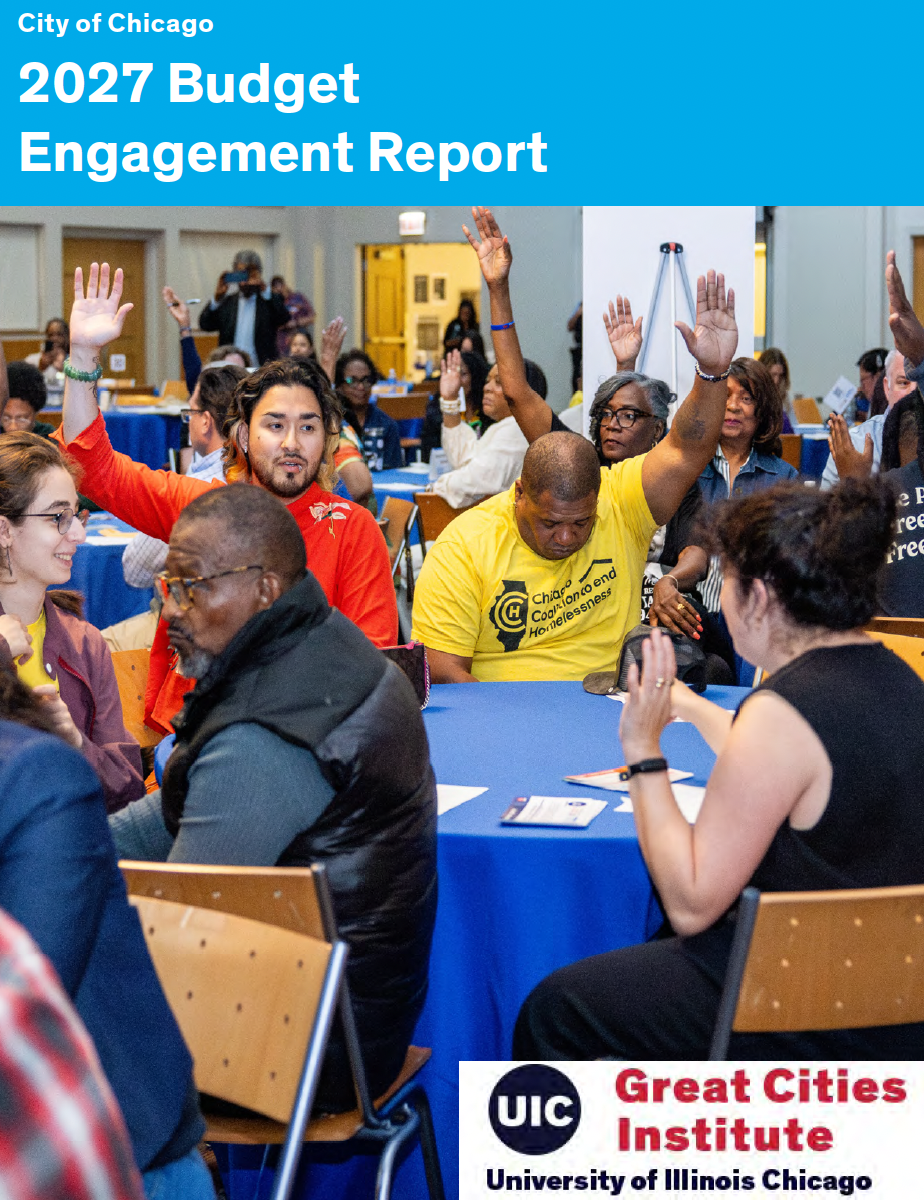
The 2027 Budget Engagement Report was developed by the Great Cities Institute’s Neighborhoods Initiative in partnership with the City of Chicago’s Office of Budget and Management and the Mayor’s Office of Community Engagement. Through five in-person events, including a dedicated youth event, the process brought together 446 attendees, collected 591 surveys, and produced 74 group budgets through a new interactive budget game. These activities gave residents opportunities to share priorities, discuss tradeoffs, and suggest improvements.
Key Findings
- Protecting essential services: Maintaining City services was a leading priority. About 57% of public engagement survey respondents favored keeping current services even if it meant higher taxes or fees. Emergency response, garbage collection, and public health services were also consistently selected in the budget game.
- Exploring additional revenue: Among public engagement survey respondents, 88% selected increasing taxes on large corporations as a potential revenue source. Participants also called for greater efficiency, accountability, and better use of existing City resources.
- Investing in neighborhoods: Participants emphasized jobs, local businesses, infrastructure, affordable housing, libraries, arts programming, and public spaces, particularly in historically disinvested communities.
- Addressing interconnected needs: Housing, mental health, public health, and community safety emerged as important priorities. Many participants supported a combination of services rather than a single approach to addressing community challenges.
- Including youth perspectives: Young participants shared many priorities with other residents but placed greater emphasis on reallocating existing funding toward housing and repairing streets, alleys, and sidewalks.
- Improving public engagement: Participants wanted clearer budget information, more accessible opportunities to participate, and greater transparency about how their feedback influences City decisions.
Looking Ahead
The report underscores the importance of balancing Chicago’s financial challenges with the services and investments that support everyday neighborhood life. Although the findings reflect the perspectives of voluntary participants rather than all Chicago residents, they offer valuable insights for City leaders as they consider the 2027 budget.
The findings also highlight the importance of continued community engagement, clear communication, and meaningful follow-through so residents can better understand how their input informs future decisions.