The Second City of Empire: How History and Place Shape Race and Resistance in Liverpool
Event Summary
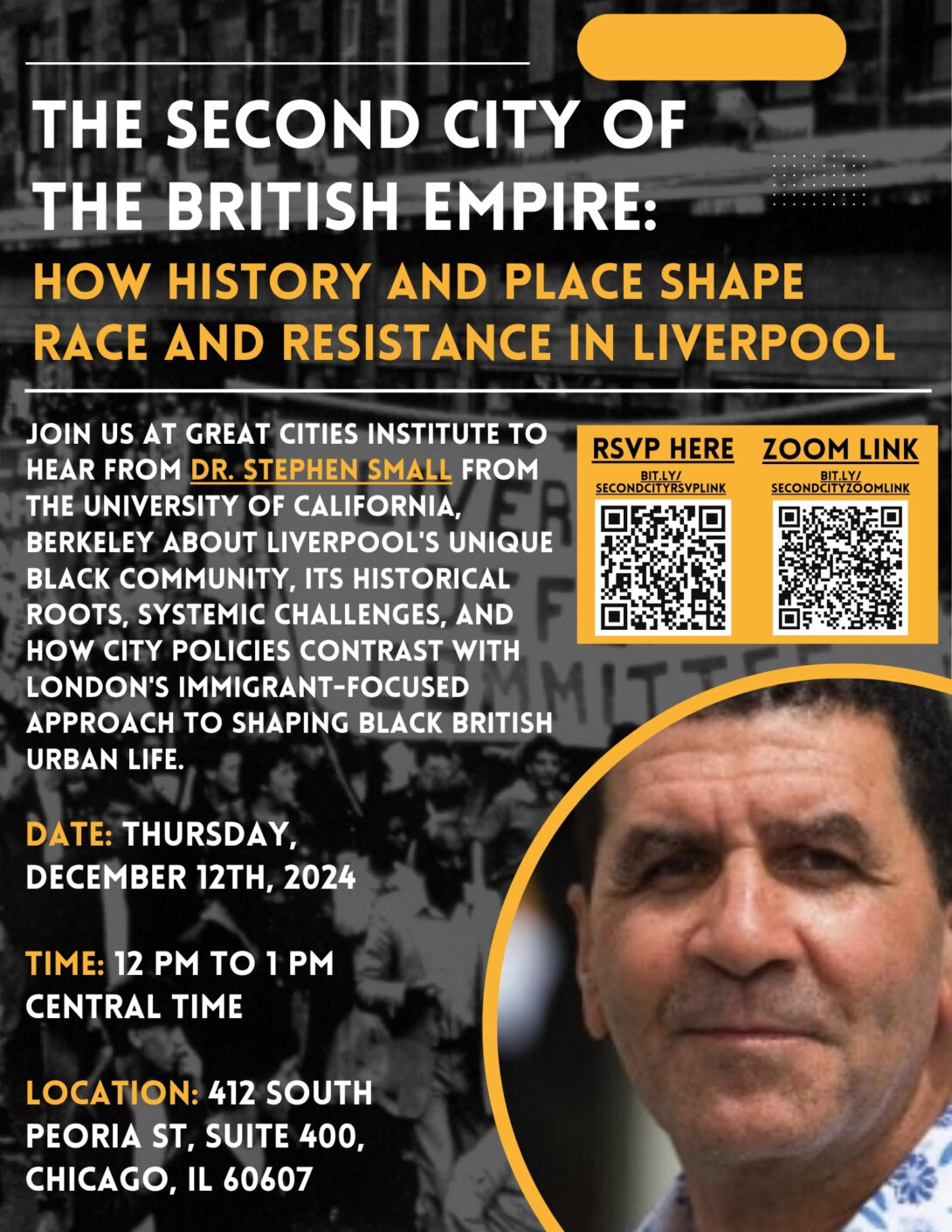
December 12, 2024 | 12:00–1:00 PM Central Time
Great Cities Institute, University of Illinois Chicago
On December 12, 2024, the Great Cities Institute at the University of Illinois Chicago hosted a lecture featuring Dr. Stephen Small of the University of California, Berkeley, exploring Liverpool’s complex racial history and the ways its political, economic, and imperial legacy has shaped Black identity, inequality, and resistance in Britain.
Drawing from his research and forthcoming book, Black Liverpool, Dr. Small examined Liverpool’s historical connections to slavery, imperial trade with West Africa, and its long-established Black population. He discussed how these historical forces contributed to the development of multigenerational Black communities and interracial families while also perpetuating systemic racial inequalities and inspiring enduring traditions of resistance and cultural expression.
The lecture also explored the distinctive experiences of Liverpool’s Black communities and how the city’s policies and historical development differed from London’s immigrant-focused approach to Black British urban life. Through historical analysis and personal reflections, Dr. Small highlighted the importance of place, community, and collective memory in understanding the evolution of Black Britain.
The event provided an opportunity for students, researchers, and community members to engage in a broader conversation about race, urban history, structural inequality, and the enduring influence of colonialism on contemporary cities.