Your browser is unsupported

We recommend using the latest version of IE11, Edge, Chrome, Firefox or Safari.

Research Clusters

GCI’s mandate is to support and produce engaged urban research that is developed in partnership with multiple stakeholders across disciplines, sectors, and locales. GCI’s research agenda is a collective product, reflective of shared priorities and key directives as identified through ongoing dialogue with our partners.

Our research agenda is divided into four key research clusters that bring together the work of researchers across UIC’s campus and other universities, along with the work of community stakeholders and other advocates and interested organizations. The separate focus areas inform conversations, produce debates, and influence public dialogue around the critical question for our future: “What can cities and regions do to make themselves into great places?”

The clusters bring together the work of researchers across UIC’s campus and other universities, along with the work of community stakeholders and other advocates and interested organizations.

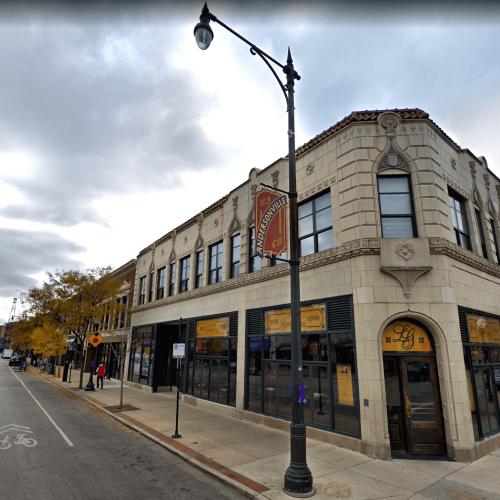
Cornerstore in Andersonville
Employment & Economic Development
Access to training and quality jobs, economic development policies that benefit residents and businesses alike, and access to goods and services are all key to a sustainable, fair, and strong local economy.
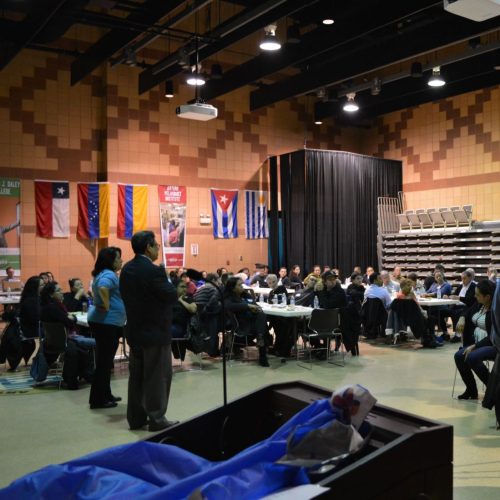
Two researches speaking to a group of people in a gymnasium.
Local & Regional Governance
A changing role of the public sector, a challenging fiscal context, shifting demographics, and economic insecurity are just a few of the complex circumstances facing local and regional governments.
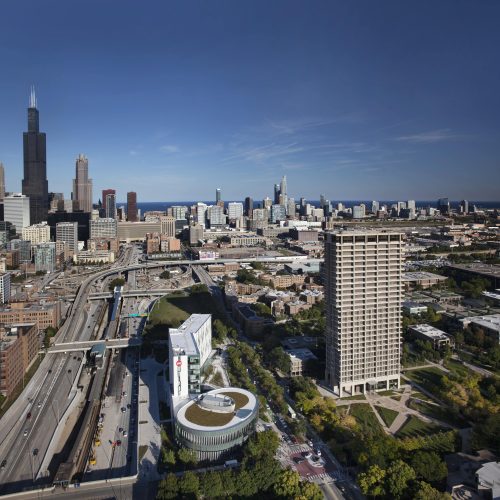
Aerial view of the Eisenhower highway, Sears Tower, and southern portion of the skyline.
Dynamics of Global Mobility
The world recently witnessed a major global milestone: more than half of the world’s population is now living in cities.
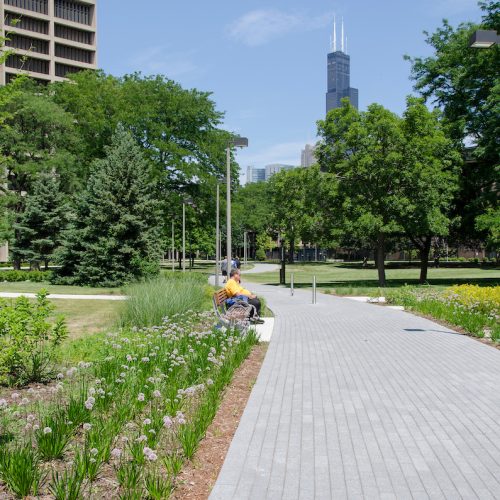
Flowers along a path on campus
Energy & the Environment
Accelerating energy consumption, climate change, resource extraction and the demands of a growing global population have put stress on the natural environment causing climate change, deforestation, ecosystem damage, and polluted natural environments.
Mural of holding hands and a mother with a child
Community Wellbeing
Thriving communities depend on safe neighborhoods, strong social networks, accessible public spaces, and equitable health outcomes. Community wellbeing is shaped by the social, economic, and environmental conditions that allow all residents to live with dignity, connection, and purpose.